
Underfloor heating foil
in category: Underfloor heating foil
Chosen
Price
List of products

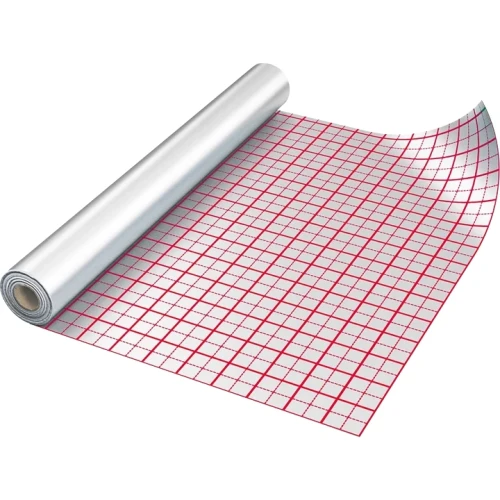
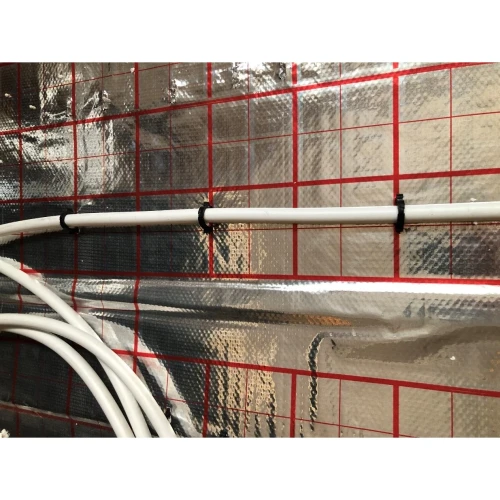
Underfloor heating foil – insulation layer beneath screed and pipes
Underfloor heating foil is a protective and installation layer laid over insulation, such as polystyrene boards. It protects the substrate while the screed is being poured and makes it easier to lay out heating pipes. This category includes printed insulation foil and 105 μm thick polyethylene foil. Both are intended for installers and contractors.
What you’ll find in this category
- Insulation foil in a 50 m roll: a laminate of polyethylene film and a metallised polypropylene layer, 105 μm thick, with a printed grid.
- Polyethylene floor foil: 105 μm thick (±10%), for use as a protective layer beneath screed.
How to choose
- Material: PE laminate with metallised polypropylene has a surface that can help reduce heat loss. Polyethylene foil provides a simpler protective barrier.
- Thickness: both foils are 105 μm thick, so they do not significantly increase the height of the floor build-up. Allow for the ±10% tolerance when choosing floor foil.
- Printed grid: the insulation foil has solid lines forming a 10 cm grid and dashed lines forming a 5 cm grid. This speeds up pipe laying without additional measuring.
- Joining strips: for larger areas, the insulation foil has a 2 cm margin that makes it easier to lay adjacent strips.
Typical applications
The foil is laid over polystyrene boards as a barrier against moisture and dirt while the screed is being poured. It also makes it easier to work with fixing clips and can reduce the risk of localised damage to the insulation. At walls, the foil can be turned up around the floor perimeter.
Frequently asked questions
What is foil beneath screed used for in underfloor heating?
It protects insulation, such as polystyrene boards, from moisture and dirt while the screed is being poured. It also provides an installation layer on which the heating pipes are laid.
Does the printed grid help with laying pipes?
Yes. The insulation foil has a grid: solid lines form a 10 cm grid, while dashed lines form a 5 cm grid. This makes pipe placement faster and more accurate.
How are strips of insulation foil joined?
The foil has an additional 2 cm margin that makes it easier to join adjacent strips. This is particularly useful over larger areas.
Not sure which foil is right for your installation? Contact our technical support team and we’ll help you choose the right product.