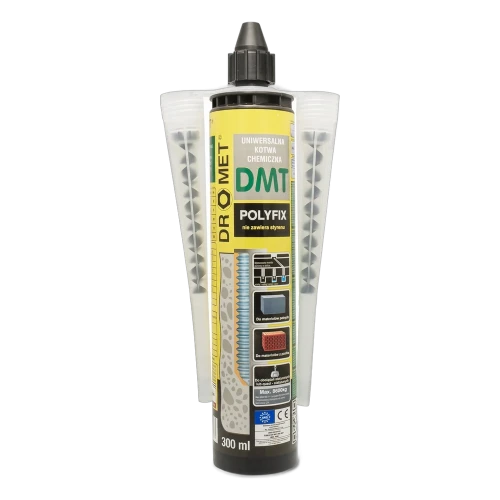
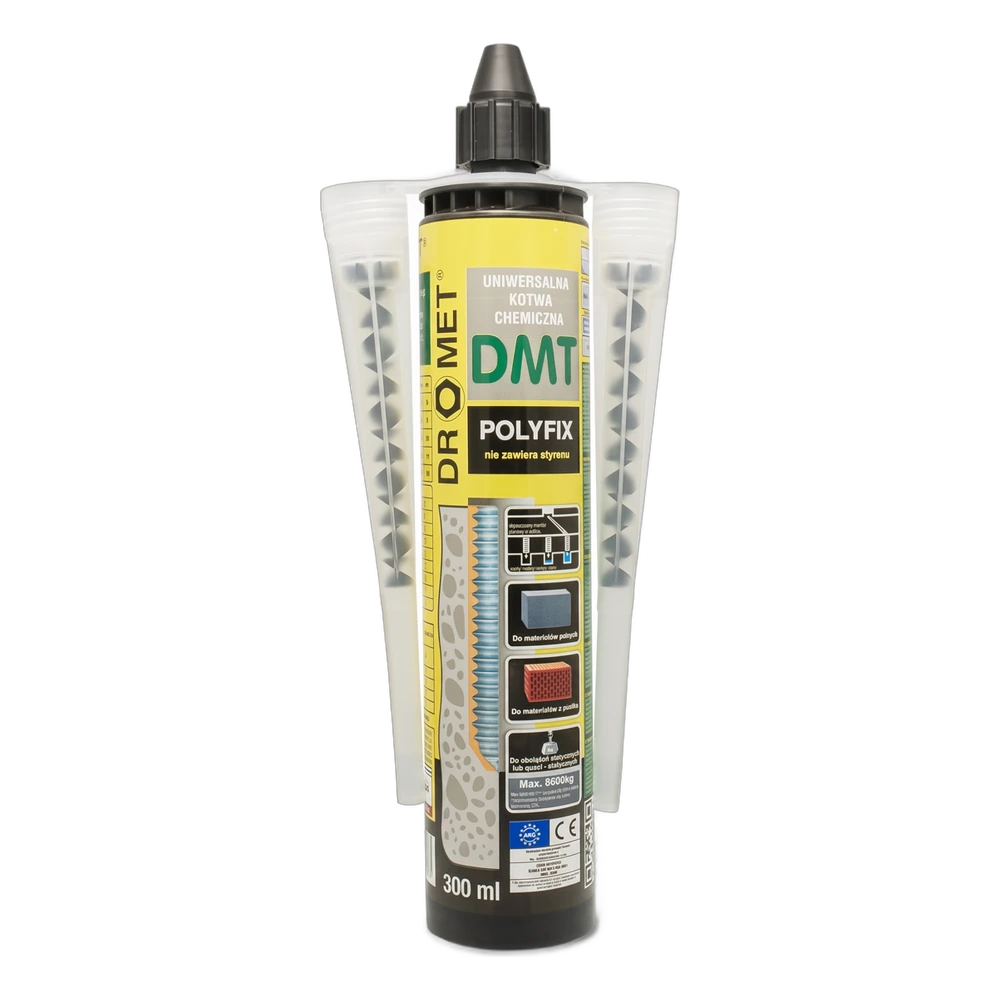




Polyester resin chemical anchor, styrene-free, 300 ml
Leave feedback on the product
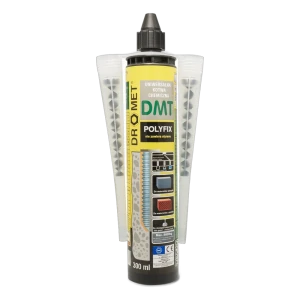
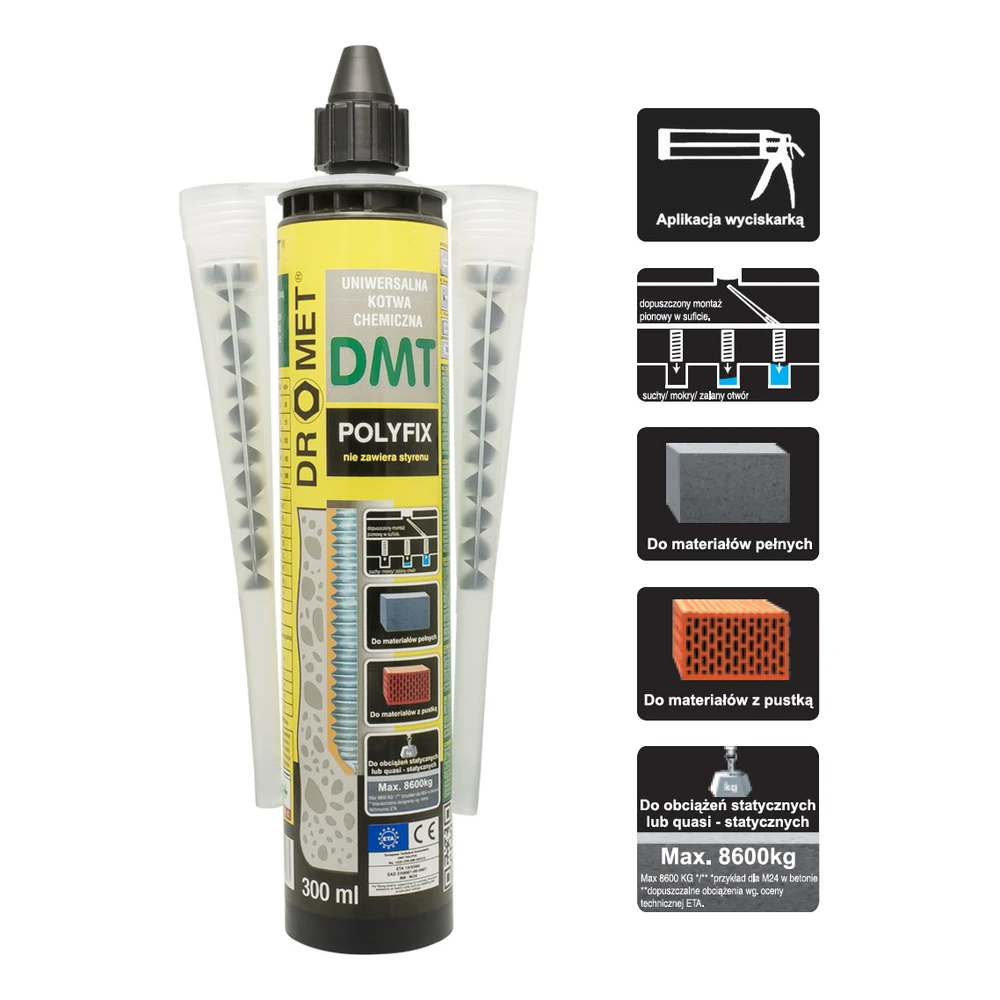
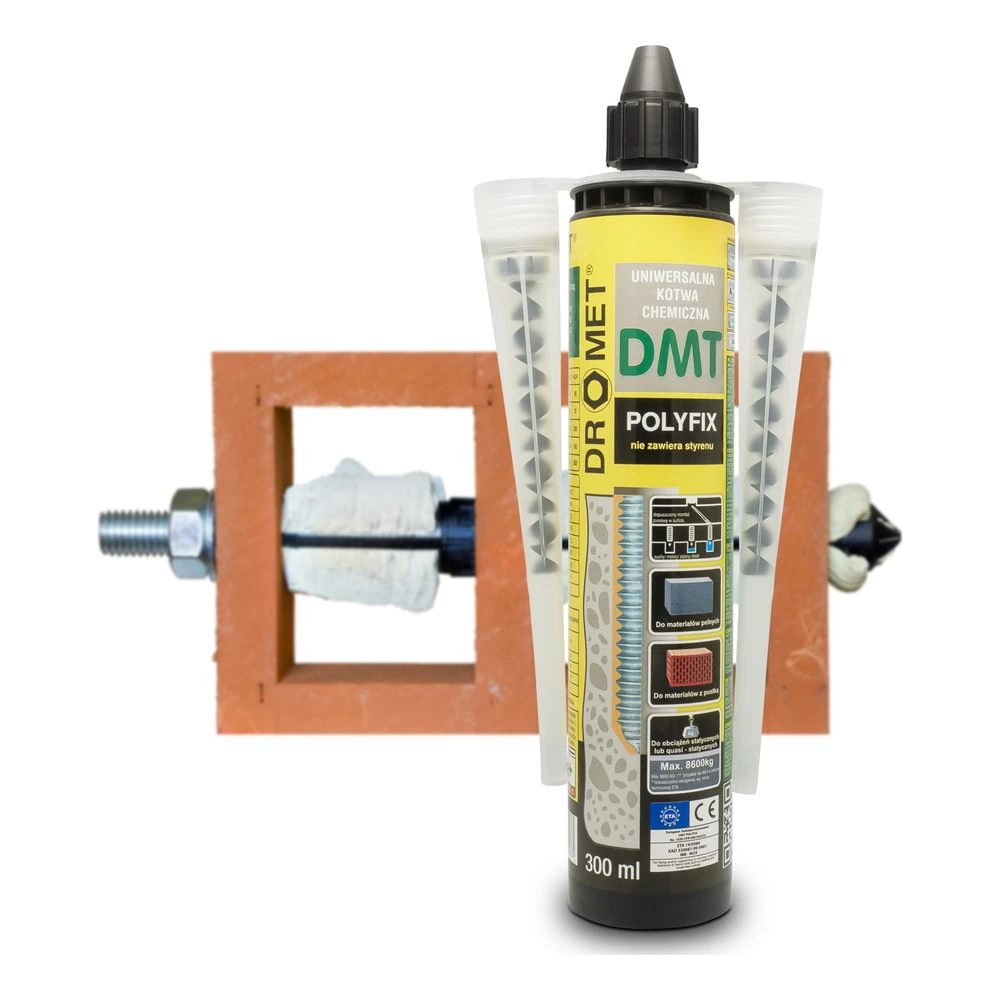
DMT POLYFIX chemical anchor, styrene-free polyester resin, 300 ml cartridge. For M8–M24 threaded rods and rebar. For solid and hollow substrates (with mesh sleeve). Vertical installation, applied with a dispensing gun.
Product code: 002-193
Description
Styrene-free polyester resin in a 300 ml cartridge for anchoring M8–M24 threaded rods in solid and hollow materials; applied using a cartridge gun
About the product
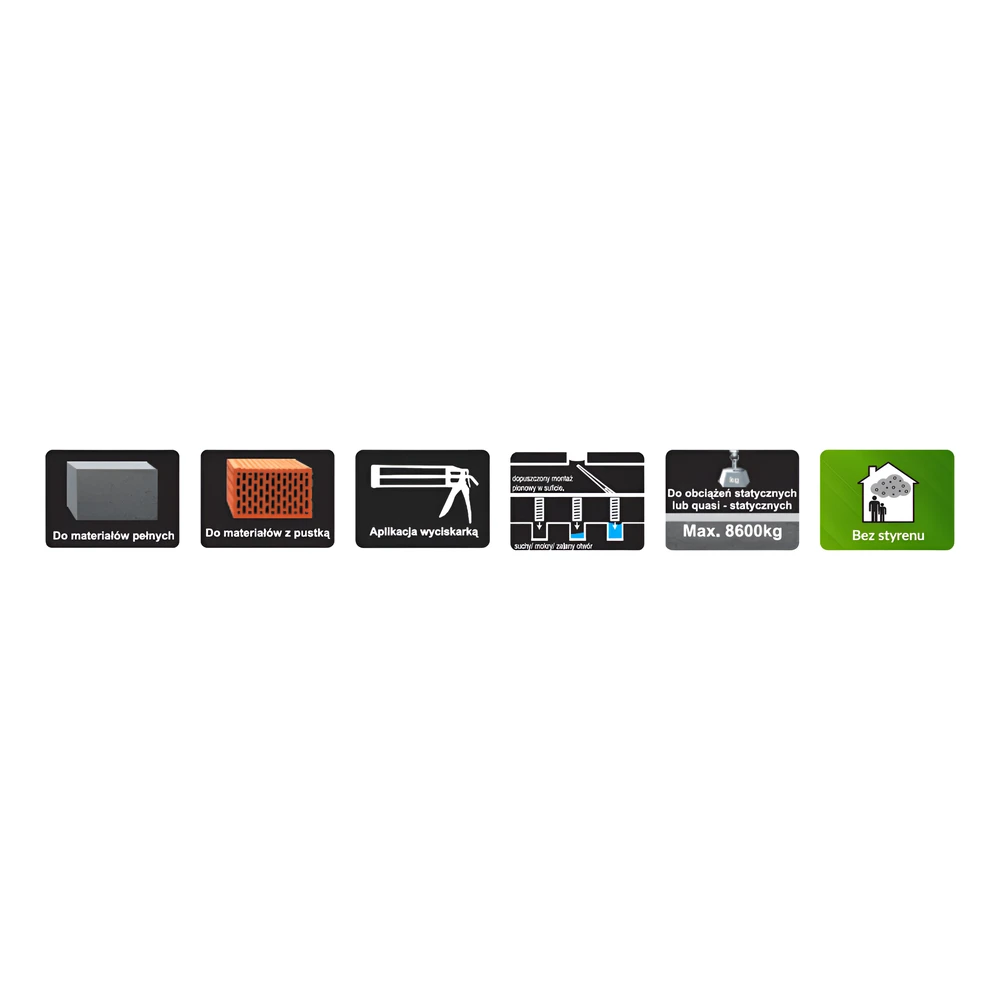
The chemical anchor is used for anchoring M8–M24 threaded rods in solid and hollow masonry. It is intended for static or quasi-static loads. It is supplied as a styrene-free polyester resin in a 300 ml cartridge, applied using a cartridge gun. In solid masonry, the rod is installed without a sleeve, while a sleeve must be used in hollow masonry.
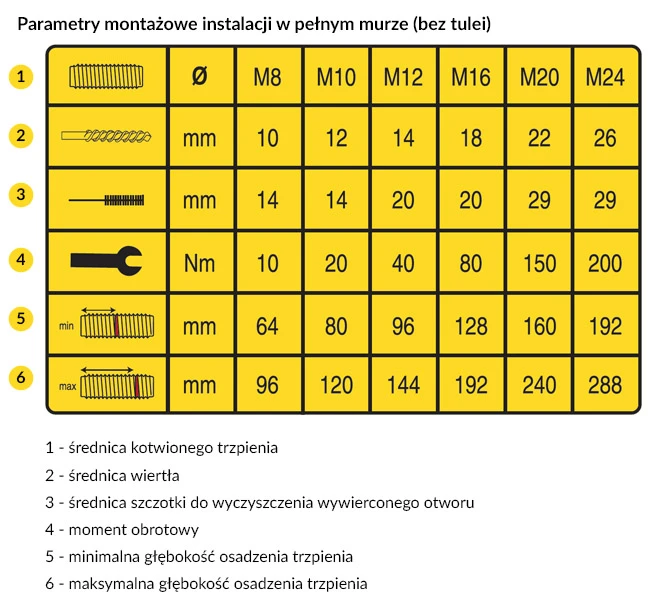
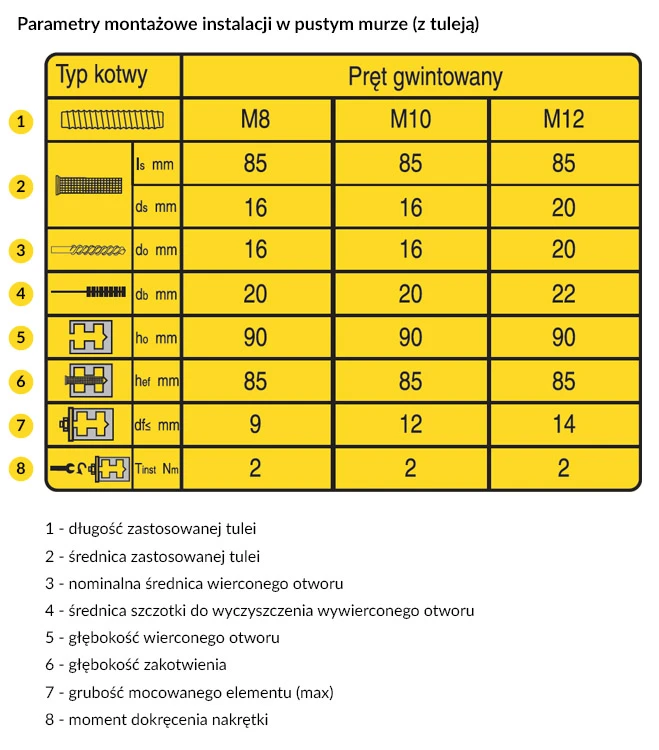
Select the drill bit diameter, embedment depth and nut tightening torque for the rod from the manufacturer's table. For example, an M12 rod in solid masonry requires a drill bit diameter of 14 mm, an embedment depth from 96 to 144 mm and a tightening torque of 40 Nm. Check the manufacturer's table for installation parameters when using a sleeve in hollow masonry. After drilling the hole, clean it thoroughly with a brush and blow out the dust, as the cleanliness of the hole determines the adhesion of the resin. Then fill the hole with resin from the bottom and insert the rod.
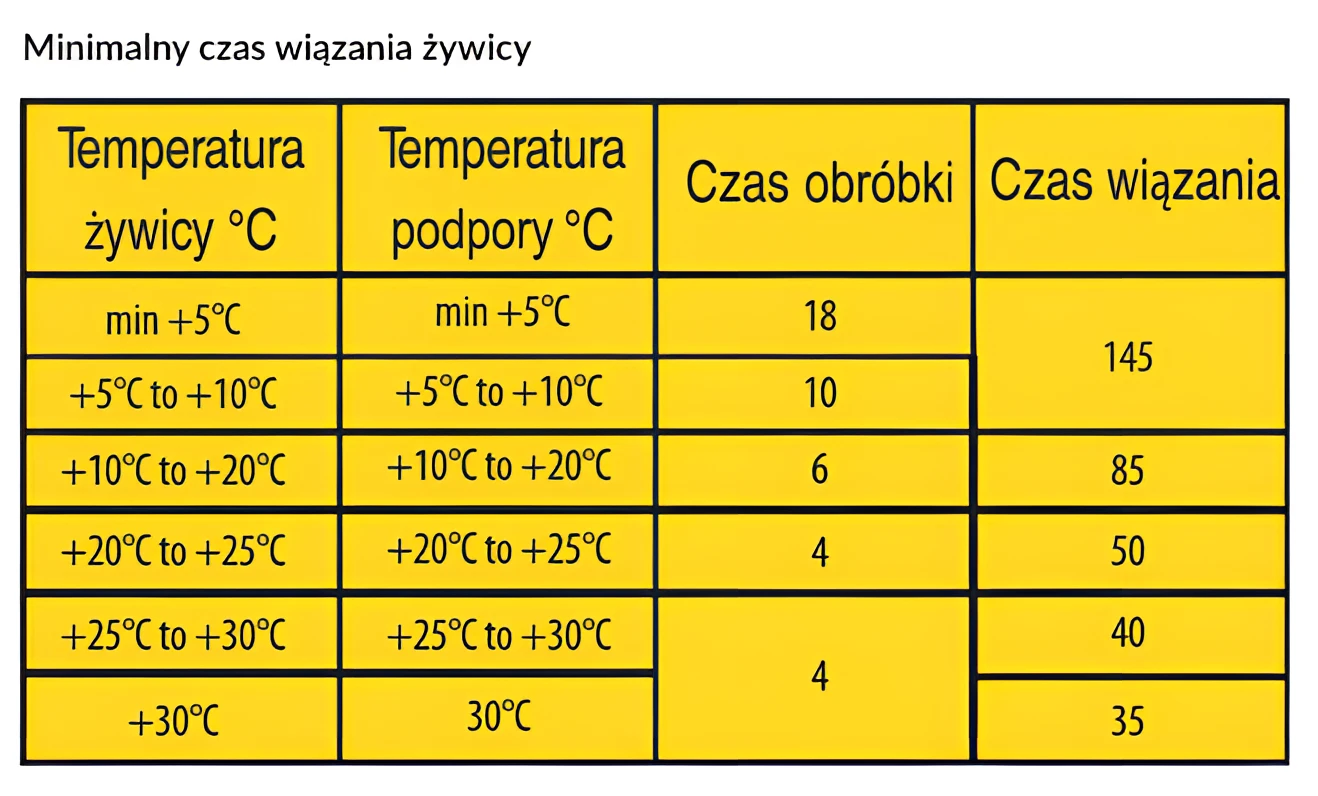
The hole may be dry, wet or water-filled; according to the manufacturer, overhead installation is also permitted. Working and curing times depend on the temperature of the resin and the substrate. Do not load the anchorage until the full curing time specified in the manufacturer's table for the given temperature has elapsed, and tighten the nut to the torque given in the table. The load-bearing capacity of the anchorage depends on the substrate, rod diameter and embedment depth — for structural connections, it is specified in the design.
Selection and installation
- ✓Drill a hole to the diameter and depth given in the table for the selected rod.
- ✓Clean the hole thoroughly with a brush and blow out the dust – the cleanliness of the hole determines the adhesion of the resin.
- ✓Fill the hole with resin from the bottom (using a cartridge gun) and insert the rod.
- ✓Do not load the anchorage until the full curing time specified in the manufacturer's table for the given temperature has elapsed; tighten the nut to the torque given in the table.
Important
The load-bearing capacity of the anchorage depends on the substrate, rod diameter and embedment depth – for structural connections, it is specified in the design. Working and curing times depend on the temperature of the resin and the substrate.
Reviews
If you've added a review and it doesn't appear on the list, it may be pending moderation.
Leave feedback on the product